

Tropica casino Plinko game
Introduction
When I assess quick-format casino products, I usually look past the surface first. That matters with Tropica casino Plinko, because this is one of those games that appears almost too simple at a glance. A ball drops from the top of a peg board, bounces left and right, and lands in a multiplier slot at the bottom. That is the whole visual idea. Yet in practice, Plinko creates a very specific type of tension that many classic slots do not reproduce in the same way.
For Australian players exploring fast casino games, Plinko stands out because it combines instant results, visible randomness and adjustable risk settings in a format that is easy to understand from the first round. At the same time, the simplicity of the interface can be misleading. The real experience depends heavily on board setup, number of rows, selected risk level, stake size and the player’s expectations about short sessions versus long variance-driven runs.
In this review, I will focus strictly on the game itself: how Plinko at Tropica casino works, why it attracts attention, where the pressure points are, and what a player should realistically expect before pressing the drop button. The point is not to oversell the format, but to explain what it actually offers and where caution is justified.
What Plinko is and why it attracts so much attention
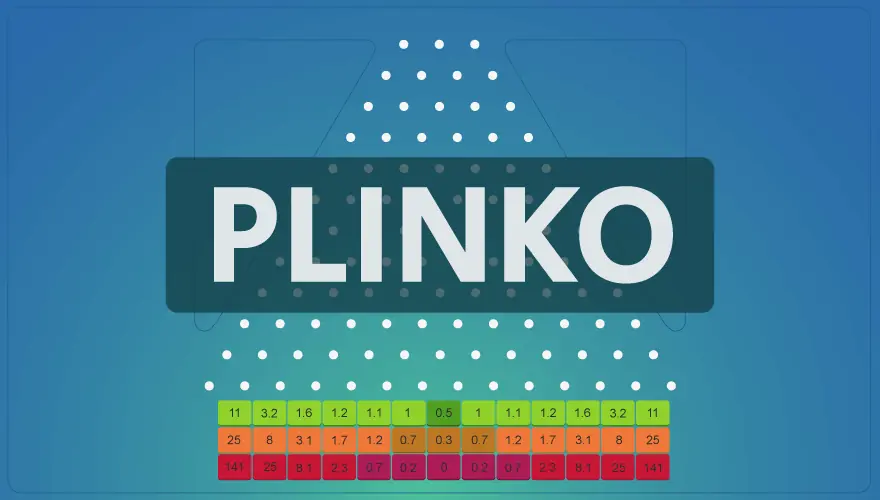
Plinko is a chance-based casino game built around a vertical board filled with pegs. The player selects a bet, chooses a risk profile in many versions, and then releases a ball from the top. As the ball falls, it collides with pins and changes direction step by step until it reaches one of several payout slots at the bottom. Each slot carries a multiplier, and that multiplier determines the return for that round.
The reason this format has become so visible is not just speed. It is the combination of clarity and suspense. In a slot, the result is often processed behind the scenes and only then displayed through reels and symbols. In Plinko, the path is shown in front of the player. Even though the outcome is still governed by randomisation, the movement creates a stronger feeling of watching the result unfold in real time.
That visual transparency is one of the game’s strongest hooks. Players can see the ball drift toward low multipliers, flirt with high-value edge zones, or suddenly bounce away at the last second. This creates an emotional rhythm that feels immediate. One of my recurring observations is that Plinko often feels more personal than it really is. The ball seems to have a “journey,” even though mathematically it is still a random event.
Another reason for its visibility is that the rules are easy to grasp without a learning curve. There are no paylines, no bonus rounds to decode, no symbol hierarchy, and no long paytable study required just to begin. That low barrier to entry makes Plinko accessible to casual players, while the adjustable settings give experienced users enough room to tailor the session.
How the Plinko system actually works in practice
At the mechanical level, Plinko is built on repeated binary deviation. Every time the ball hits a peg, it is redirected to the left or right. Over many rows, these small changes create a distribution pattern. In broad terms, balls tend to land more often in central zones, while extreme edge slots are hit less frequently. That is why the highest multipliers are usually placed near the edges and the more common returns sit closer to the middle.
For the player, this means one important thing: the board is not just decorative. Its geometry directly shapes the payout structure. The more rows involved, the longer the path and the wider the possible spread of outcomes. A short board usually produces a narrower range of results. A deeper board can create larger multiplier gaps and more dramatic swings. To understand the wagering rules behind each offer, open no deposit bonus codes checklist next.
In many versions of Tropica casino Plinko, the session flow is built around a few core controls:
- Bet size — determines the value of each drop.
- Risk level — usually low, medium or high, affecting how the multiplier map is distributed.
- Rows — in some versions, the player can choose how many peg levels the ball will pass through.
- Manual or auto play — useful for testing pace, but also capable of accelerating losses if used carelessly.
What matters is how these settings interact. Low risk generally compresses the payout map. You will tend to see more modest returns and fewer extreme outcomes. High risk stretches the board economics in the opposite direction: many drops may return very little or nothing significant, but rare edge hits can produce substantially larger multipliers.
That is where the game stops being “just a ball drop” and starts becoming a session management exercise. The visible action is simple. The underlying decision is not.
| Game element | What it changes | What it means for the player |
|---|---|---|
| Bet amount | Value of each drop | Higher stakes increase pressure quickly in fast sessions |
| Risk level | Multiplier distribution | Higher settings can create longer dry spells and sharper spikes |
| Number of rows | Path length and outcome spread | More rows often mean broader variance and more dramatic top-end potential |
| Auto mode | Session speed | Convenient, but easy to underestimate when losses stack fast |
Why the tempo feels so different from slots
The pace of Plinko is one of the main reasons players either connect with it immediately or lose interest just as quickly. Each round resolves in seconds. There is almost no downtime, no reel spin animation to slow the process, and no layered bonus sequence to interrupt the core loop. You place a stake, release the ball, watch the path, and get the outcome. Then the next round is ready.
That sounds efficient, but it also changes player behaviour. Fast-resolution formats can compress emotional swings into a short period. A session of fifty drops may take less time than a handful of feature-heavy slot spins. If the risk level is aggressive, this can make bankroll movement feel unusually sharp.
One detail that deserves attention is that Plinko often creates micro-drama on every single round. In many slots, most base spins are forgettable because nothing visually meaningful happens. In Plinko, even a low return can feel eventful because the player has watched the ball approach several possible outcomes. This is one reason the format can hold attention despite minimal visual complexity.
At the same time, not everyone will enjoy that rhythm. Some players prefer layered entertainment: themes, symbols, features, respins, expanding elements, free spins. Plinko strips most of that away. It is direct, fast and repetitive by design. If a player needs variety within the round structure, the format may start to feel narrow after the novelty wears off.
Understanding probability, risk settings and real session behaviour
This is the section where players need clarity rather than hype. Plinko is simple to operate, but it can be misunderstood easily. Because the ball is visible, some users start reading patterns into the path. They may think the left side is “due,” or that several central landings mean an edge multiplier is getting closer. In practical terms, that mindset can become expensive.
Each drop is an independent random event within the game’s programmed model. The visible path does not create a memory effect that the next round must correct. If a high multiplier has not appeared for a while, that does not guarantee one is coming soon. This is especially important in high-risk setups, where long stretches of modest or losing results are not unusual.
Here is the practical reality:
- Low risk usually offers smoother balance movement, but the upside is more limited.
- Medium risk often gives the most balanced feel for players who want volatility without extreme instability.
- High risk can look attractive because of the headline multipliers, but the road to those results is often rough and uneven.
I would add one useful observation from repeated testing of this format across platforms: players often overestimate how often “interesting” top multipliers should appear. The board makes those edge zones look close enough to touch, but visually close is not the same as statistically common. In Plinko, the interface can make rare outcomes feel more reachable than they really are.
That is not a flaw in itself. It is part of the design language. But it matters if a player enters the session with unrealistic expectations.
How risky Plinko really is and who it suits best
Plinko can range from relatively manageable to highly aggressive depending on configuration. It is not accurate to label the format as either safe or dangerous without context. A low-risk board with modest stakes can feel controlled and readable. A high-risk board with fast auto drops can become a sharp-variance product very quickly.
So who is it for? In my view, Plinko suits players who enjoy:
Short, high-focus sessions. The format works well for people who prefer immediate outcomes over long feature cycles.
Visible randomness. Some players like seeing the route to the result, even when they know it is still random.
Adjustable intensity. The ability to choose a lower or higher risk profile gives the game flexibility.
On the other hand, it may not suit players who want:
Deep thematic immersion. Plinko is not built around story, atmosphere or audiovisual richness.
Complex bonus architecture. There are no cascading feature layers like in many modern slots.
Predictable pacing. Even when the interface looks calm, the balance curve can move sharply, especially under high-risk settings. Table game fans will get more out of this review after reading Tropica Casino game library review for online casino players.
For Australian users browsing Tropica casino Plinko, the key is to match the format with personal playing style. If you enjoy quick decision loops and can stay disciplined with stake size, the game can be engaging. If you chase entertainment through variety and long-form features, a slot or live table product may be a better fit.
What the player should know about rhythm, expected outcomes and session control
Plinko rewards disciplined expectation management. That is probably the single most useful practical takeaway. A player should not approach it as a steady earner, and should not treat isolated big multipliers as a normal session standard. The structure naturally produces many ordinary results and occasional spikes. The exact shape of that curve depends on the setup, but the underlying principle remains the same.
Before starting, I suggest thinking in terms of session rhythm rather than single-drop excitement. Ask simple questions:
How many rounds am I comfortable playing?
What stake level still feels reasonable if a long sequence of weak returns occurs? When the support team feels slow, coupons checklist explains the fastest ways to reach them.
Am I choosing high risk because it fits my bankroll, or because the top multiplier looks tempting?
Those questions matter because Plinko can create a false sense of control. You choose the bet, you choose the board settings, you watch the path. That interactivity is real, but it does not remove the underlying randomness. The game gives you setup control, not outcome control.
One of the more memorable truths about Plinko is this: the interface feels playful, but the variance can be cold. That contrast is exactly why some players love it and others bounce off it after one session.
| Player expectation | What usually happens in reality |
|---|---|
| “The ball nearly reached the edge, so a big hit must be close.” | Near-misses do not increase the chance of the next top multiplier |
| “High risk will make the session more exciting.” | It can, but it may also create long unproductive stretches |
| “Small bets make the game harmless.” | Fast pace can still build significant turnover over time |
| “Auto play saves effort.” | It does, but it can reduce awareness of how quickly the balance is moving |
How Plinko compares with slots and other casino formats
The biggest difference between Plinko and classic slots is structural. Slots are built around reels, symbols, payline logic or cluster systems, and often include bonus rounds that alter the base game. Plinko removes almost all of that. Instead of waiting for a symbol combination, the player watches a physical-style drop resolve into a multiplier result.
That change affects the whole user experience.
Compared with slots, Plinko is:
More transparent visually. You see the route of the result rather than just the final symbol arrangement.
Faster in repetition. There is less animation overhead and fewer interruptions between rounds.
Less varied in presentation. The core loop changes very little from one drop to the next.
Compared with Tropica Casino roulette page for detailed casino comparison, Plinko shares the appeal of a simple stake-to-outcome cycle, but the emotional texture is different. Roulette gives a clean reveal. Plinko gives a rolling reveal. Compared with crash games, Plinko is less about timing a cash-out decision and more about accepting a pre-set random path. Compared with live dealer products, it is far less social and theatrical.
This is why I do not treat Plinko as a replacement for every other casino category. It fills a specific niche. It is ideal when a player wants fast rounds, visible suspense and configurable intensity without learning a complex rule set.
Practical strengths and limitations of Tropica casino Plinko
A fair review should separate genuine advantages from the kind of broad praise that says very little. In practical use, Tropica casino Plinko has several clear strengths.
First, accessibility. The game is easy to understand even for someone who has never touched a peg-drop format before. That lowers friction and makes the first session straightforward.
Second, controllable setup. Risk levels and, in some versions, row settings allow the player to shape the session style. This matters more than many people realise. The same Plinko board can feel conservative or highly aggressive depending on configuration.
Third, strong round-by-round engagement. The path of the ball gives each drop a visible narrative. Even minimalistic rounds can feel alive.
But there are limits too.
Repetition arrives faster than in feature-rich slots. If a player wants evolving mechanics or layered bonus events, Plinko may feel one-dimensional over longer sessions.
The top-end appeal can distort judgment. Large multipliers attract attention, but they can encourage unrealistic expectations, especially on high-risk settings.
Fast pace can hide bankroll drain. Because rounds resolve quickly, a player may not notice how much total stake volume has passed through the session.
That last point is especially important. Plinko does not need loud animations to become intense. Its pressure comes from speed and repetition. Quiet interface, fast turnover: that combination catches some players off guard.
What to check before launching a Plinko session
Before starting a session, I recommend a short practical checklist. It does not take long, and it can change the quality of the experience considerably.
- Check the risk setting first. Do not start on high risk just because the top multiplier looks attractive.
- Look at the multiplier spread. The board tells you a lot about how extreme the outcome distribution may be.
- Set a stake that still feels sensible after a rough sequence. Plinko can produce many underwhelming drops in a row.
- Use demo mode if available. It helps you understand the tempo and board behaviour without immediate bankroll pressure.
- Be careful with auto play. It is useful for rhythm testing, but not ideal if you are still learning how the game feels in real time.
For players in Australia, this kind of preparation is more useful than chasing a “best strategy” headline. There is no reliable pattern-reading shortcut that turns Plinko into a predictable product. What you can control is the setup, pace and your response to variance.
If I had to reduce it to one sentence, it would be this: go into Plinko with a session plan, not with a prediction model.
Final verdict
Tropica casino Plinko offers a very specific kind of casino experience: fast, visually clear, highly repeatable and shaped heavily by risk settings. Its core strength is not complexity, but tension. The game turns a simple falling-ball concept into a format where every round feels immediate and easy to follow. That makes it approachable for newcomers and still interesting for players who enjoy quick decision cycles. Players who value quick withdrawals will find real timings in best Tropica Casino Gates of Olympus slot.
Its strongest points are clear. The rules are easy to grasp. The action is direct. The adjustable setup changes the feel of the session in meaningful ways. And unlike many traditional slots, the result unfolds in front of the player rather than being hidden behind reel logic. Anyone stuck on account verification can follow the steps laid out in Tropica Casino safety and account details.
Still, this is not a format to approach casually just because it looks simple. The visible path can create misleading confidence, high-risk settings can produce uneven sessions, and the speed of play can turn small bets into substantial turnover faster than expected. That is where caution matters.
Who will enjoy it most? Players who like short, focused sessions, visible randomness and a stripped-back format with immediate feedback. Who may prefer something else? Anyone looking for rich themes, feature depth, story-driven presentation or slower entertainment value.
My final view is straightforward: Plinko is worth trying if you want a clean, fast casino format that puts variance front and centre. Just do not mistake simple presentation for simple session behaviour. That is the real lesson of Plinko, and it is the reason the game remains so compelling.
FAQ
What should be checked before starting a Plinko round?
Confirm the stake amount and the selected mode, demo or real-money play, before launching the ball. Review whether any bonus conditions are active on the account balance.
How does Plinko scoring work when the ball drops?
Each ball follows the board and lands in a scoring slot at the bottom. The slot determines the multiplier for that round, then the result is credited to the game balance.
Which option is used for practicing Plinko: demo mode or real-money play?
Demo mode lets players test the experience without affecting real funds. Real-money play runs the same mechanics, but results are reflected in the casino account balance.
Can Plinko be played on a mobile casino app, and will controls change?
Plinko is designed for mobile play, with touch-friendly controls for placing the next ball. On smaller screens, stake and action buttons may appear in a compact layout for quicker round starts.
When a bonus is active, does Plinko always count toward wagering?
Bonus coverage depends on the current promo rules tied to the account. Checking the active promo terms and wagering requirements before playing helps avoid surprises.
What should be reviewed if a Plinko round feels higher risk than expected?
Review the risk level shown for the game variant and the multiplier range indicated by the board. Stake size also affects exposure, so starting smaller can help manage a responsible session.
How can account login affect Plinko access, especially after signing up?
Sign up or login must be completed before real-money play is enabled. If login is pending or partially verified, the game may load but actions like wagering can be blocked.
If a working mirror is used, does Plinko keep the same session and balance view?
A current mirror should open the same official casino game selection and keep access consistent when logged in. Logging in again under the same account helps restore balance visibility for the next round.
Why does Plinko sometimes fail to load in the game lobby, and what should be tried first?
Check connection stability and reload the game tab, then try a different browser or restart the device browser session. Clearing site data may help if previous game assets are stuck; support can assist if the issue repeats.
